Understanding Teen Overwhelm in a World of Plenty
It's Saturday morning, and the smell of pancakes drifts through the house. You expect to see your teen shuffle in, bleary-eyed but smiling, ready to dive into the weekend. Instead, the house remains quiet, and their door stays closed. You know they have everything they need—a supportive family, great friends, all the gadgets they could want—but today, like many others, they can't seem to get out of bed.
You might feel puzzled or even frustrated. How can a kid with so much going for them feel so stuck? It's easy to assume they're just being lazy, but when a teen who seems to have it all struggles to get up, it might be a sign of something deeper. Their world can be overwhelming, and sometimes, the weight of expectations, both perceived and real, can become too much to bear.
Start by acknowledging that your teen's feelings are valid. It’s important to approach them with empathy rather than frustration. A simple, "Hey, I noticed it's been tough for you to get going in the mornings lately," can open up a conversation. Avoid jumping to solutions right away. Instead, give them space to share what’s on their mind without feeling judged or rushed.
Sometimes, the pressure to maintain a certain image or meet expectations can lead to a feeling of paralysis. Your teen might feel like they need to be perfect in everything they do—whether it's maintaining good grades, excelling in sports, or being the 'ideal' friend. This pressure can lead to a sense of overwhelm, where the idea of starting the day feels like an insurmountable task.
One practical thing you can do is help them break down their day into smaller, manageable parts. Encourage them to focus on just getting through the next hour rather than the entire day. This can make the morning feel less daunting and more achievable. You can suggest, "Let’s just think about getting dressed and having breakfast first."
Another helpful approach is introducing a gentle morning routine. A small ritual—like playing their favorite music as they get ready—can offer a comforting structure. This routine doesn’t have to be elaborate. The key is consistency and creating a sense of predictability amidst the chaos they might be feeling internally.
Remember, it’s okay for them to have days when they need extra support. Offer your presence without the pressure to perform. Sometimes just being there, sitting in their room while they slowly start their day, can make a difference.
If you notice this pattern persisting, it might be worthwhile to explore resources that address deeper feelings of inadequacy or sadness. A workbook like "Recognizing Teen Depression vs. a Hard Week" can offer insights and strategies to differentiate between occasional blues and something more substantial.
Helping your teen navigate these feelings is not about fixing them but supporting them as they learn to manage their emotions. For more practical guidance on overcoming overwhelming feelings, "Your Pressure Isn't Proof" is a helpful resource that can offer further understanding and techniques.
The Response Training Series
Short, honest workbooks for teens who can't stand workbooks — a trilogy, one feeling at a time.
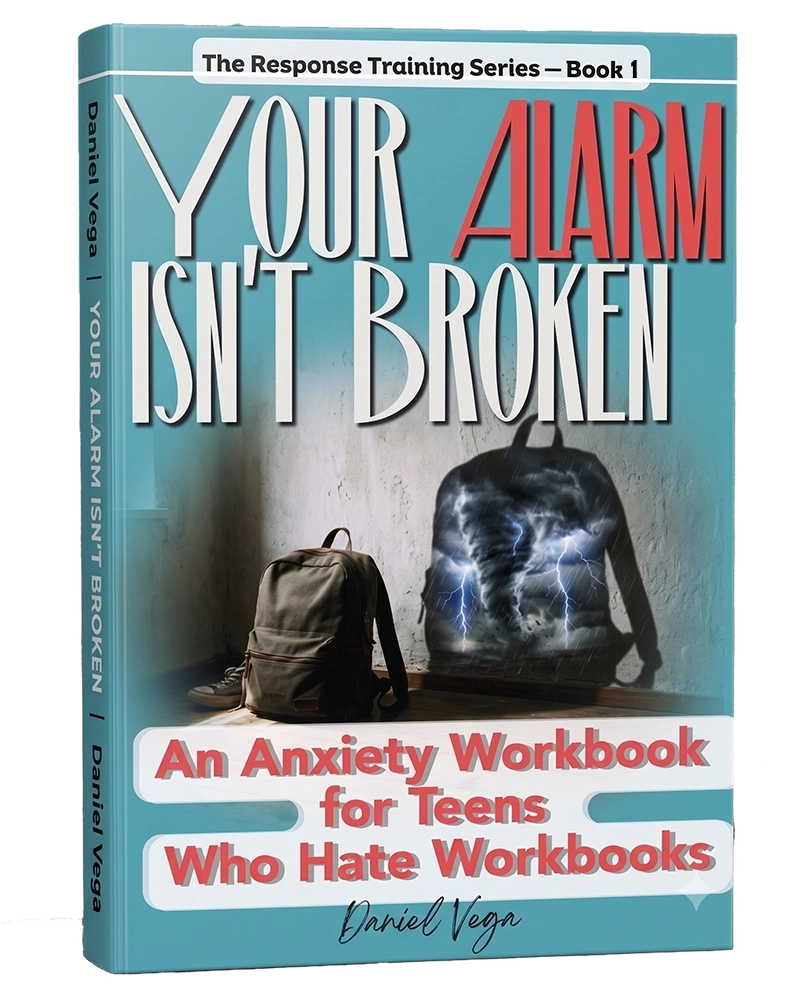 The Response Training Series — Book 1
 Your Alarm Isn't Broken
An Anxiety Workbook for Teens Who Hate Workbooks
Buy from $14.99
  The Response Training Series — Book 2
 Your Awkward Isn't Showing
A Social Anxiety Workbook for Teens Who Hate Workbooks
Buy from$14.99  The Response Training Series — Book 3
 Your Pressure Isn't Proof
A Performance Anxiety Workbook for Teens Who Hate Workbooks
Buy from$14.99 Get the free toolkit
One page, six tools your teen can use the moment anxiety spikes. Sent straight to your inbox.
No spam, ever — just the toolkit and the occasional good word.