Unraveling the Confidence Myth in Teens
It's a familiar scene: you're in the car, driving your teenager home after a long day. They're sitting beside you, gazing out the window, earbuds in place. You notice the tension in their posture, a telltale sign of the day's challenges weighing heavily on them. You ask how their day was, and you get the standard 'fine' without eye contact.
You might start to wonder what's really going on behind that composed exterior. The truth is, your teen might be wrestling with the myth that confidence is something you either have or you don't, and that it's supposed to come naturally and effortlessly. This belief can be a heavy burden, especially for an anxious teen who feels like confidence is a distant, unreachable attribute.
Let's talk about what you can do to help them unravel this myth. To start, it's important to acknowledge that confidence isn't an all-or-nothing trait. It's not a switch that gets flipped overnight. Instead, it's more like a muscle that strengthens over time with practice and experience. Sharing this perspective with your teen can be a first step in reshaping their understanding.
Next time you find a quiet moment, maybe during another car ride or while you're both cooking dinner, try starting a conversation about the times you've felt less than confident yourself. Share a story of a moment when you were nervous or unsure, and how you navigated through it. This can help demystify confidence and show that it's okay to struggle with it sometimes. Your teen needs to see that even adults don't have it all figured out.
Encourage them to think of confidence as a series of small, brave actions rather than an inherent trait. You might prompt them to reflect on a recent situation where they acted courageously, even if it was something small like speaking up in class or trying a new activity. Highlighting these moments can help them recognize their own strengths and begin to build self-assurance.
Another practical step is to focus on the idea of 'yet.' If your teen says, 'I'm not good at this,' encourage them to add 'yet' to the end of the sentence. This simple word can open the door to possibility and growth, reminding them that skills and confidence can develop over time.
Finally, be patient and supportive as they navigate this journey. Validate their feelings and let them know it's okay to feel anxious or uncertain. Reinforce that building confidence is a process, one that involves plenty of trial and error, and that's perfectly normal.
For more insights on how to support your teen in breaking free from the confidence myth, you might find "Your Awkward Isn't Showing" helpful in understanding and addressing social anxiety and self-esteem issues.
The Response Training Series
Short, honest workbooks for teens who can't stand workbooks — a trilogy, one feeling at a time.
 The Response Training Series — Book 1
 Your Alarm Isn't Broken
An Anxiety Workbook for Teens Who Hate Workbooks
Buy from $14.99
 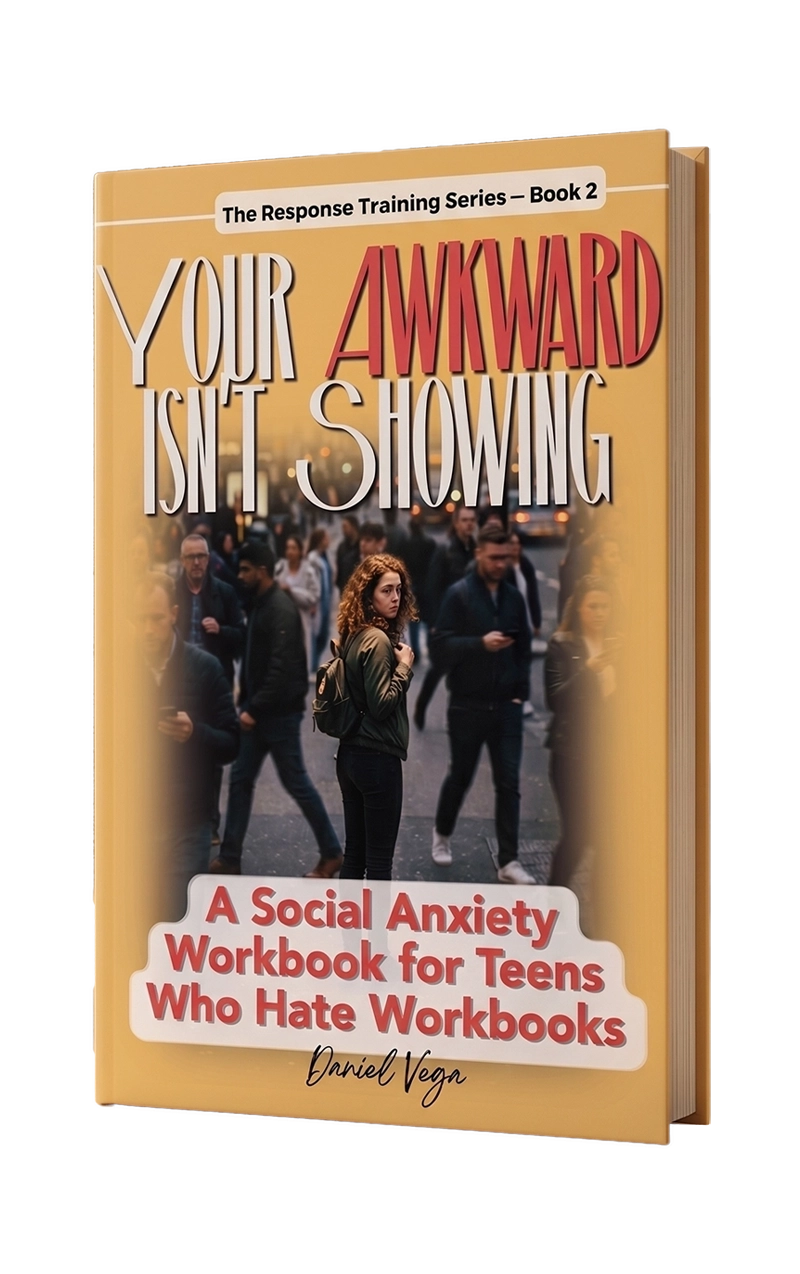 The Response Training Series — Book 2
 Your Awkward Isn't Showing
A Social Anxiety Workbook for Teens Who Hate Workbooks
Buy from$14.99 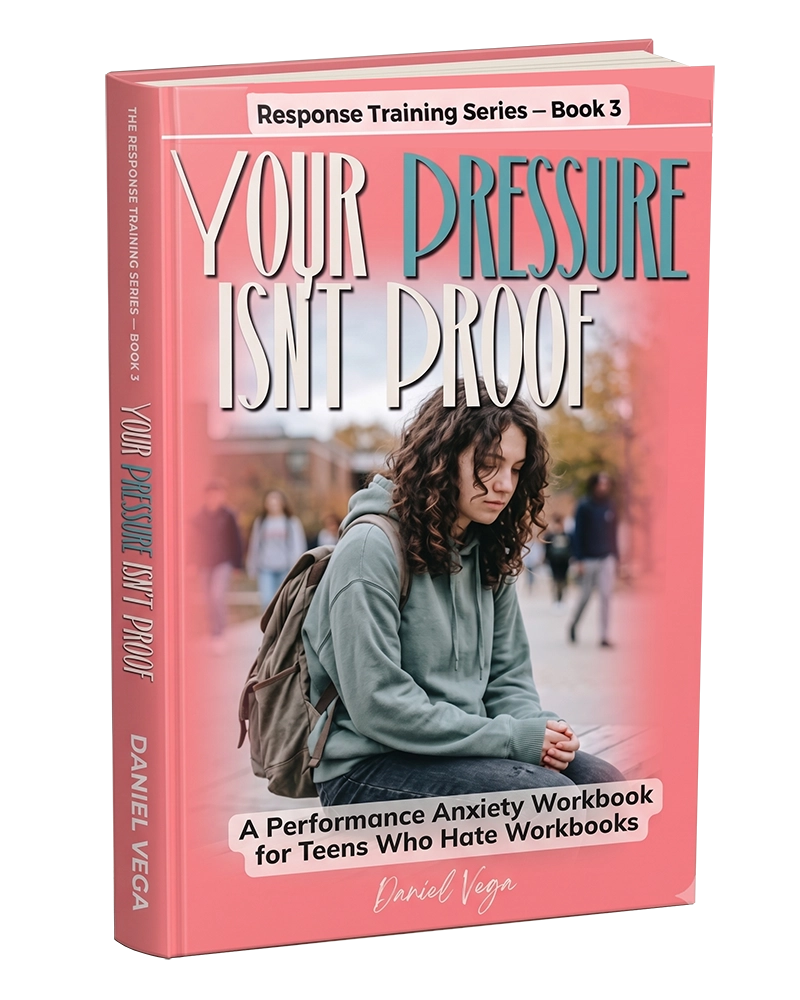 The Response Training Series — Book 3
 Your Pressure Isn't Proof
A Performance Anxiety Workbook for Teens Who Hate Workbooks
Buy from$14.99 Get the free toolkit
One page, six tools your teen can use the moment anxiety spikes. Sent straight to your inbox.
No spam, ever — just the toolkit and the occasional good word.