When Teen Struggles Signal a Need for Help
The car ride home from practice is unusually silent. Your teenager, usually chatty and full of stories about their teammates, is staring out the window, lost in thought. You ask if they're okay, and they respond with a monosyllabic 'fine,' their eyes still fixed on something far away.
It's not uncommon for teenagers to go through rough patches, but how do you know when their struggles are more than just a phase? Distinguishing between typical teenage angst and something that might need professional intervention can be challenging.
First, pay attention to patterns. A bad day can happen to anyone, but if your teenager seems persistently withdrawn or their mood swings are more frequent and intense, it may be time to take a closer look. Are they losing interest in activities they used to love, or are their grades slipping without a clear reason? These could be signals that they're struggling with more than just everyday stress.
Next, consider their social interactions. If your normally social teen is isolating themselves, canceling plans with friends, or avoiding social situations altogether, this could be a sign of social anxiety. Similarly, if they seem to be in constant conflict with friends or there's a recent change in their friend group dynamics, it might indicate underlying issues they’re not sharing.
Observe their physical health too. Changes in appetite, sleep patterns, or unexplained aches and pains can often accompany emotional struggles. If your teenager is complaining of frequent headaches or stomachaches, it might not just be physical; these can be manifestations of anxiety or stress. Our post on unraveling teen anxiety behind stomachaches can provide more insights into this connection.
The key is to open a line of communication without judgment. Instead of confronting them with a barrage of questions, try saying, 'I've noticed that you seem a bit off lately. Is there something on your mind?' This invites them to share without feeling cornered.
If your teenager opens up, actively listen without rushing to offer solutions. Sometimes, just having someone to talk to can make a significant difference. If they don't feel like talking, let them know you're there for them whenever they're ready.
When you feel that their struggles are beyond what you can handle together, it might be time to explore professional help. Look for signs like self-harm, talk of hopelessness, or drastic changes in behavior. These are serious indicators that require immediate attention.
In choosing a professional, involve your teenager in the decision-making process. Let them know that seeking help is a positive step and that it's about finding someone they feel comfortable with. It can be a therapist, school counselor, or another mental health professional.
It's crucial to normalize the idea of seeking help. Remind them that everyone needs support at different times, and there's strength in recognizing when that time comes. This approach is gently explored in the workbook, "Your Alarm Isn't Broken," which helps teenagers understand and navigate their anxiety, reassuring them that they are not alone.
Remember, your support and understanding can be the foundation your teenager needs as they navigate these challenges. By staying informed and involved, you're taking significant steps toward ensuring their well-being.
The Response Training Series
Short, honest workbooks for teens who can't stand workbooks — a trilogy, one feeling at a time.
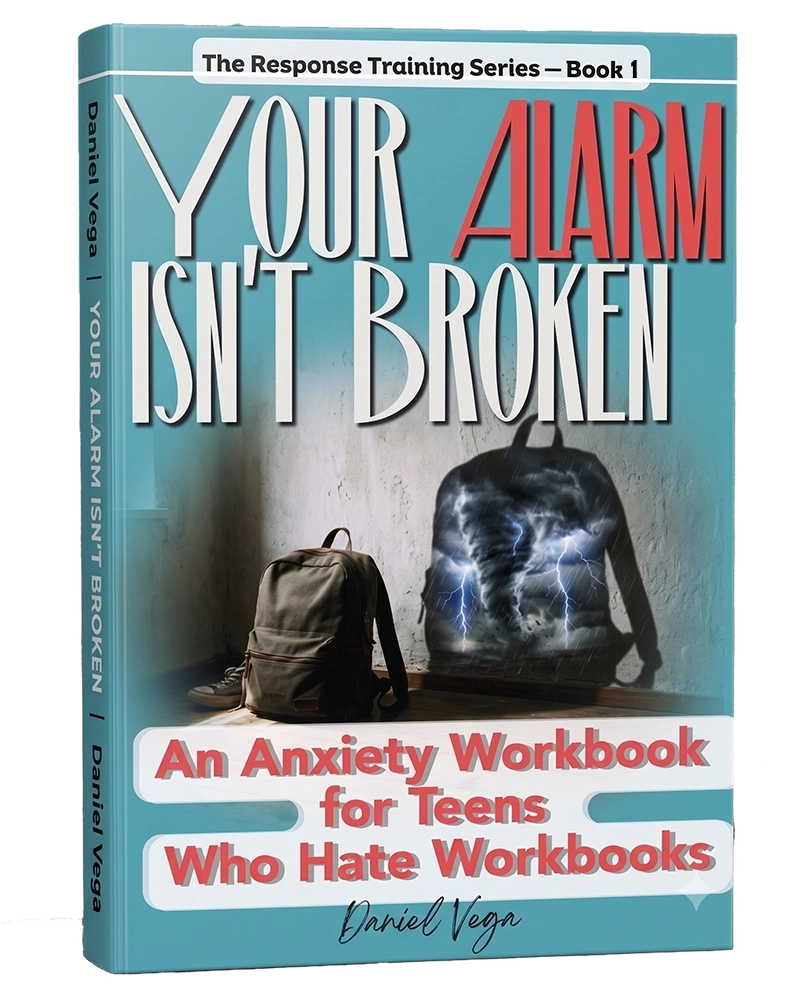 The Response Training Series — Book 1
 Your Alarm Isn't Broken
An Anxiety Workbook for Teens Who Hate Workbooks
Buy from $14.99
 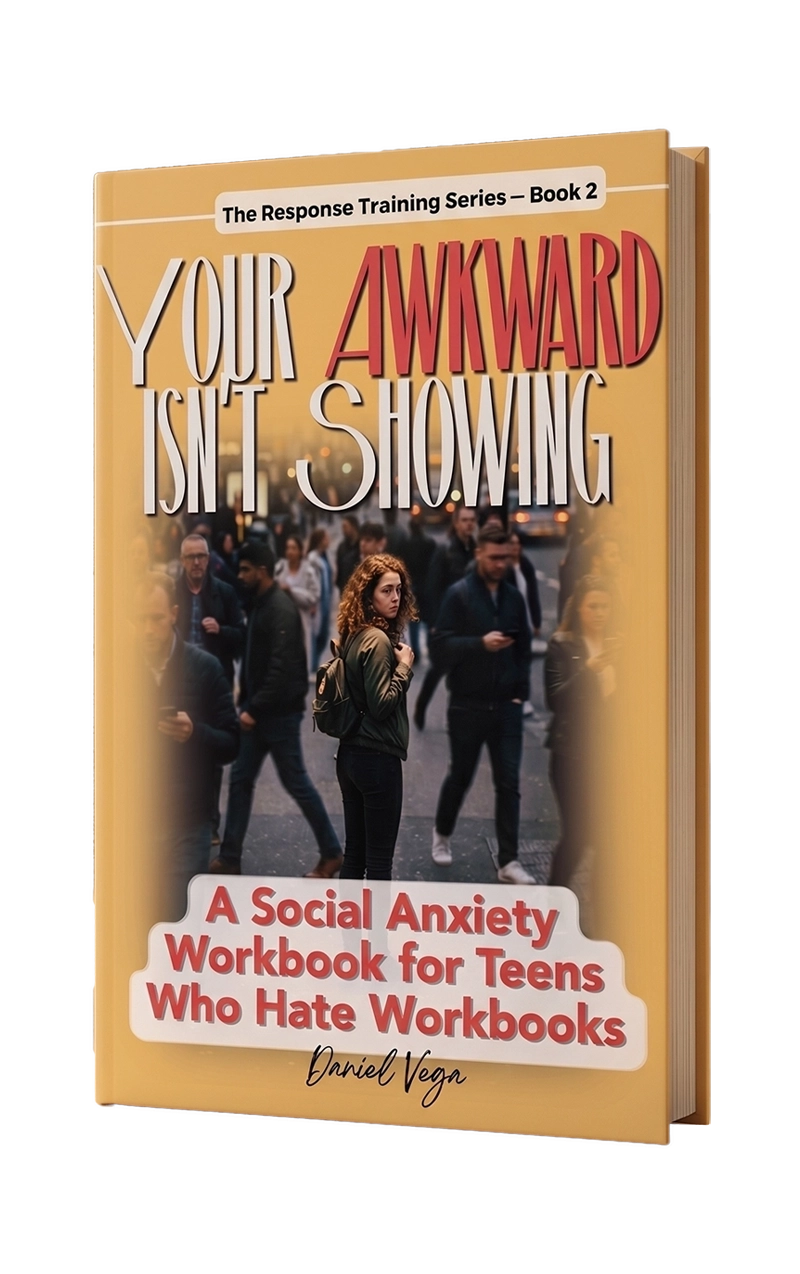 The Response Training Series — Book 2
 Your Awkward Isn't Showing
A Social Anxiety Workbook for Teens Who Hate Workbooks
Buy from$14.99 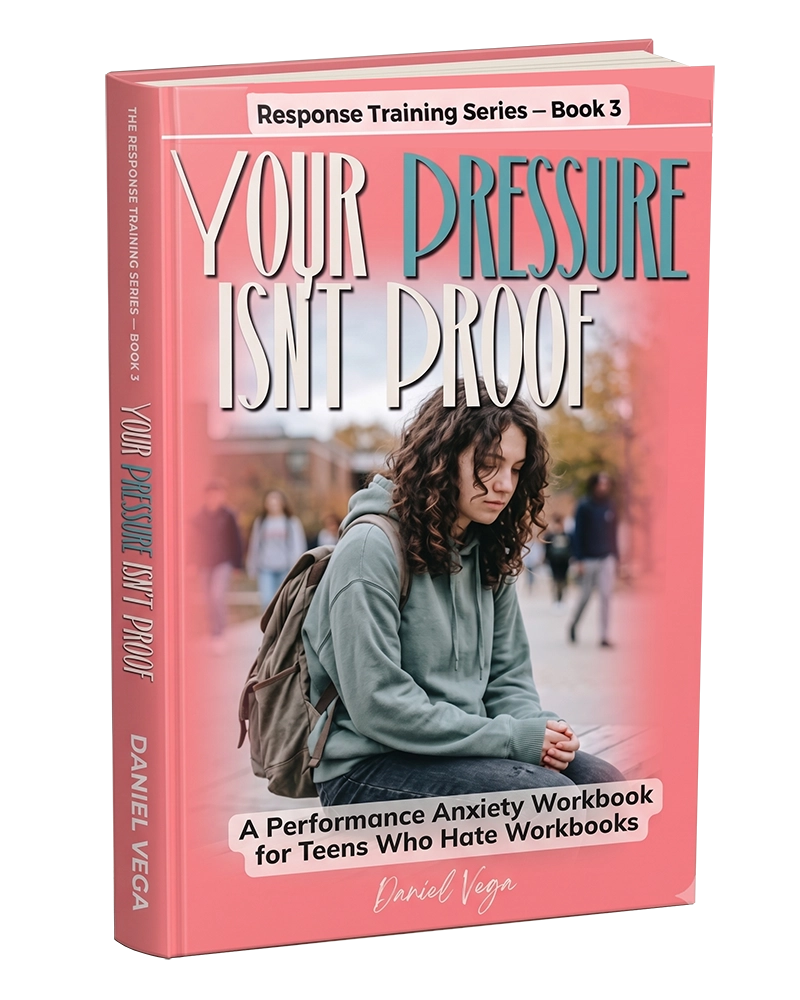 The Response Training Series — Book 3
 Your Pressure Isn't Proof
A Performance Anxiety Workbook for Teens Who Hate Workbooks
Buy from$14.99 Get the free toolkit
One page, six tools your teen can use the moment anxiety spikes. Sent straight to your inbox.
No spam, ever — just the toolkit and the occasional good word.